🔬 Optics · 12 January 2018
How Do 3D Glasses Work?
Sit in a movie theater, put on those flimsy plastic glasses, and within seconds a film transforms into a world with apparent depth — objects rush toward you, vast landscapes recede into the distance. The technology behind this illusion is elegant, drawing on the physics of light polarization and the neuroscience of depth perception. And there are several distinct technologies, each trading off cost, quality, and convenience in different ways.
Why We Perceive Depth
Human depth perception relies on many cues — perspective, object size, motion parallax — but the most powerful at close range is stereopsis: the slight difference in viewpoint between your two eyes. 3D displays exploit this biological fact using principles of light polarization, the same physics that governs how lenses focus light.
Your eyes are separated by about 6.5 cm (the average interpupillary distance). This means each eye sees the world from a slightly different angle. The brain's visual cortex compares the two slightly different images and computes the depth of each object from the disparity — how much its image shifts between the two eyes. Objects farther away have smaller disparity; nearby objects have larger disparity.
3D cinema exploits this by showing each eye a slightly different image — the left-eye view and the right-eye view of the same scene, captured from cameras spaced roughly eye-width apart. The challenge is delivering the correct image to each eye without the other eye seeing it.
The Key Physics: Polarization of Light
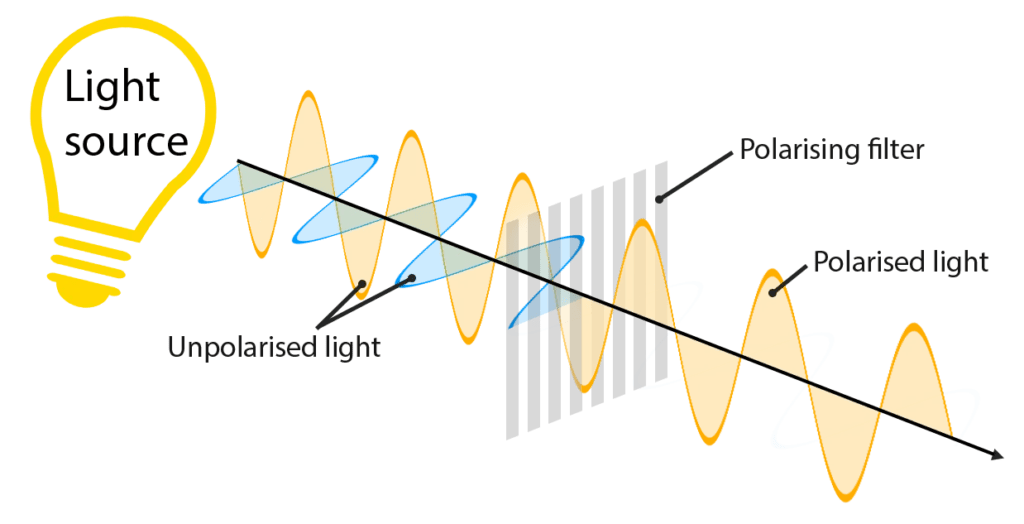
Light is an electromagnetic wave. Its electric field oscillates as the wave propagates, and the direction of oscillation is the polarization. Ordinary light (sunlight, lightbulb light) is unpolarized: the electric field oscillates in all directions equally, rotating randomly over time.
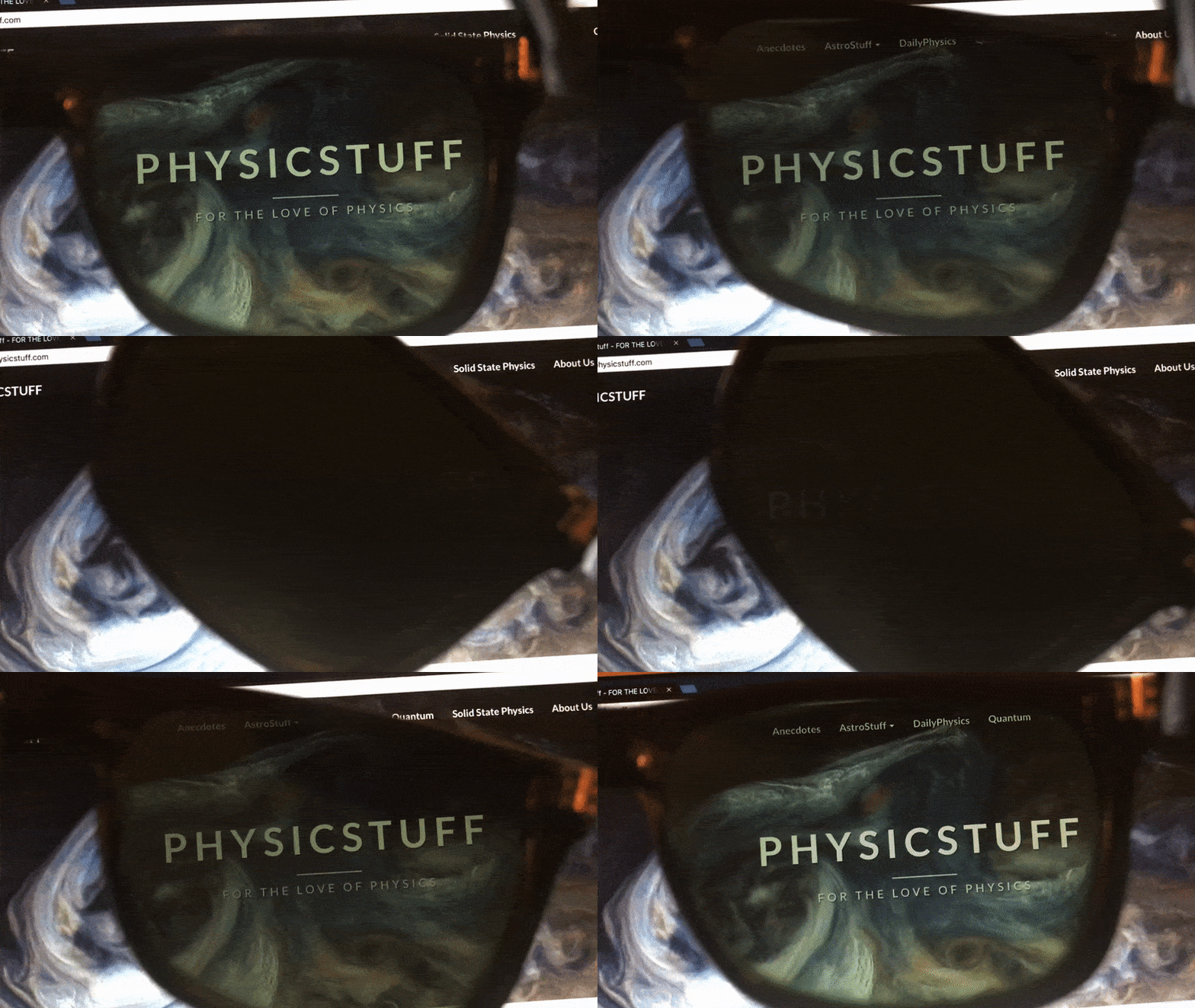
A polarizing filter transmits only the component of the electric field oscillating along one particular axis — the transmission axis of the filter. Light passing through is then linearly polarized.
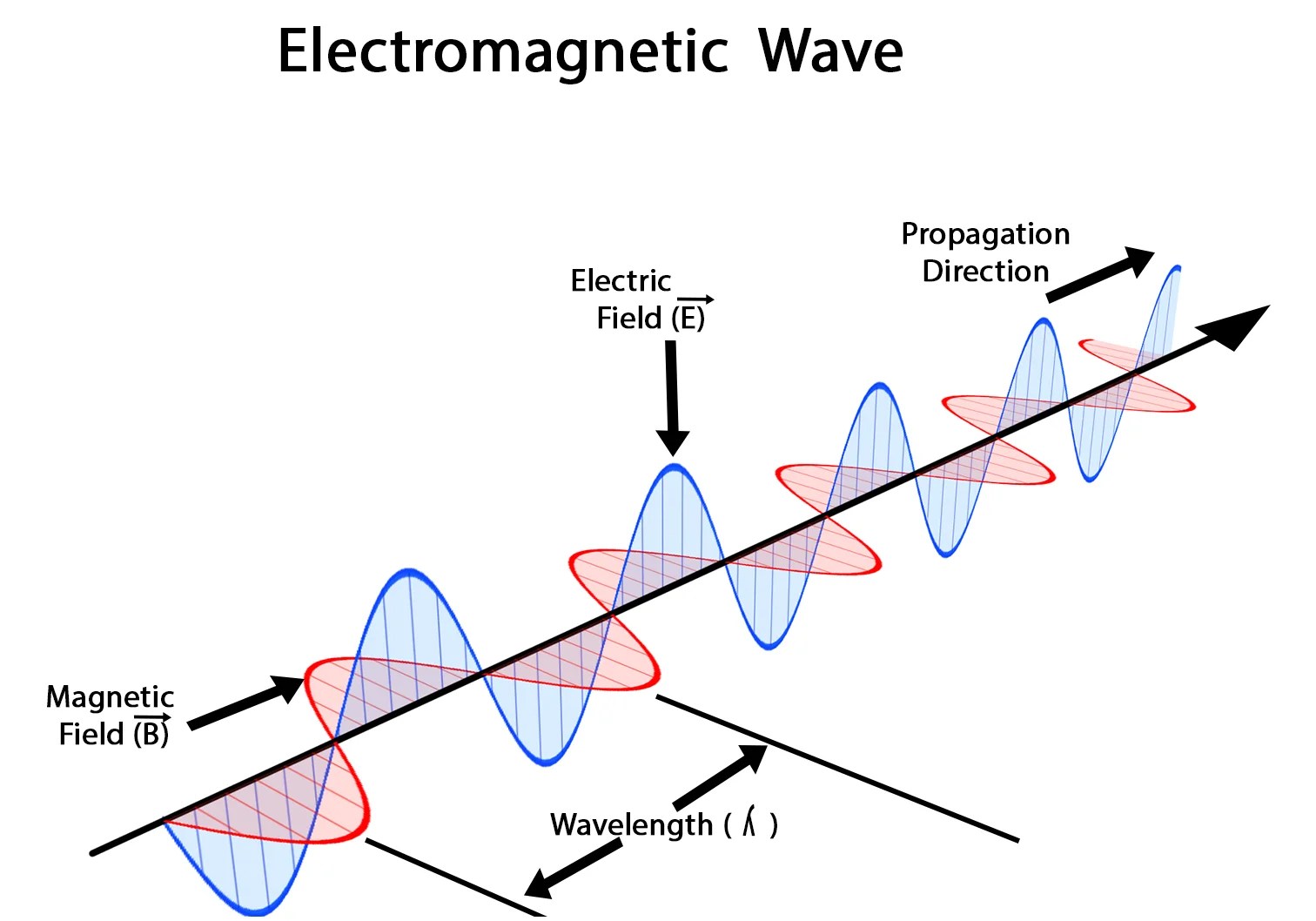
The critical property for 3D projection: two polarizing filters oriented perpendicularly to each other (say, one at 0° and one at 90°) will completely block each other's light. Light polarized at 0° is entirely blocked by a filter with transmission axis at 90°, and vice versa.
Linearly Polarized 3D Systems
The simplest polarized 3D system uses two projectors (or a single projector that rapidly alternates), each sending its image through a polarizing filter:
- Projector A (left-eye image) → polarizer at 45°
- Projector B (right-eye image) → polarizer at 135°
The glasses have matching polarizing filters — left lens at 45°, right lens at 135°. Each eye only passes the image polarized for it.
Problem: If you tilt your head 45°, the filters are now at 0° and 90° — and both images partially reach both eyes. Tilt your head enough and the 3D effect breaks down.
Circularly Polarized 3D Systems (The Cinema Standard)
Modern movie theaters use circular polarization to solve the head-tilt problem. Instead of oscillating in one fixed direction, the electric field of circularly polarized light rotates as the wave propagates — either clockwise (right-circular polarization, or RCP) or counterclockwise (left-circular polarization, or LCP).
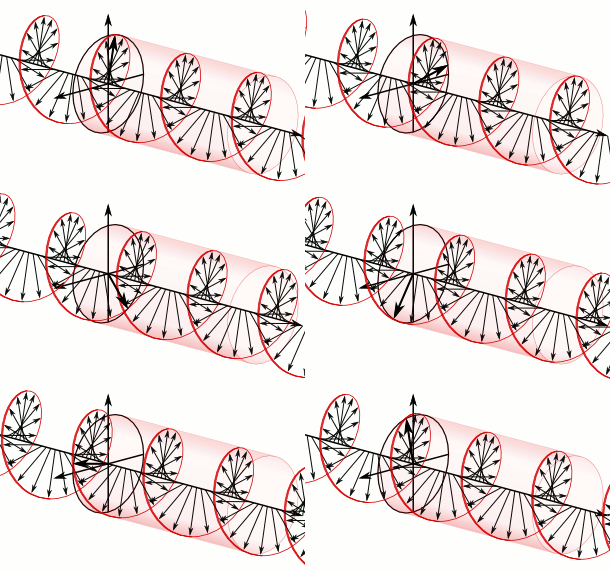
The key property: a filter that passes LCP light blocks RCP light, and vice versa. And unlike linear polarization, this blocking relationship holds regardless of how you orient (rotate) the filter. Tilting your head doesn't break circularly polarized 3D.
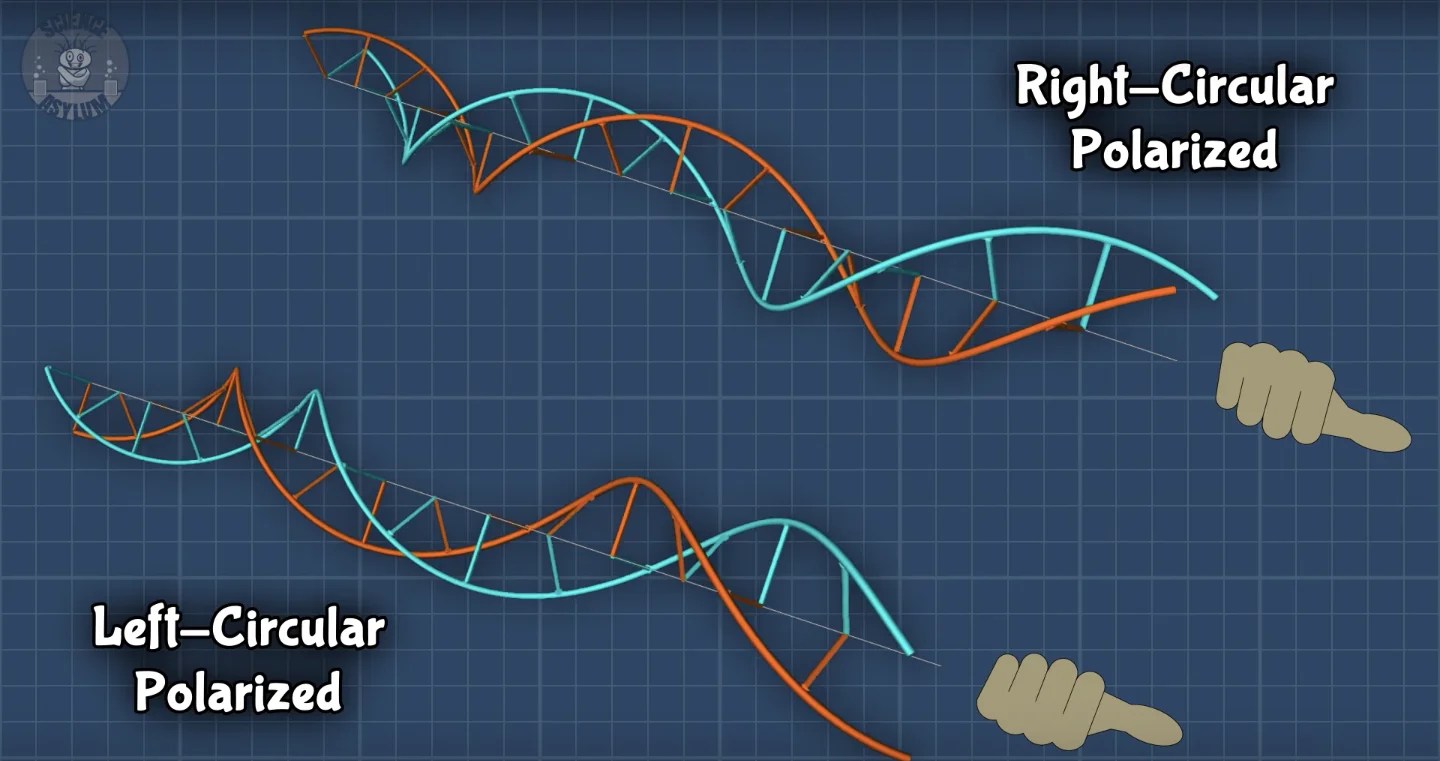
Circular polarization is created by combining a linear polarizer with a quarter-wave plate (a birefringent crystal that delays one component of the light wave by exactly a quarter wavelength). The two perpendicular polarization components become 90° out of phase, causing the combined electric field vector to rotate in a circle.
The glasses have quarter-wave plates oriented to reverse the handedness — LCP becomes linearly polarized in one orientation after passing through the plate, and the linear filter in the glasses either passes or blocks it.
Circularly polarized 3D is used in virtually all commercial movie theaters worldwide. The glasses are cheap, durable, and work regardless of head position.
Anaglyph Glasses (Red-Cyan)
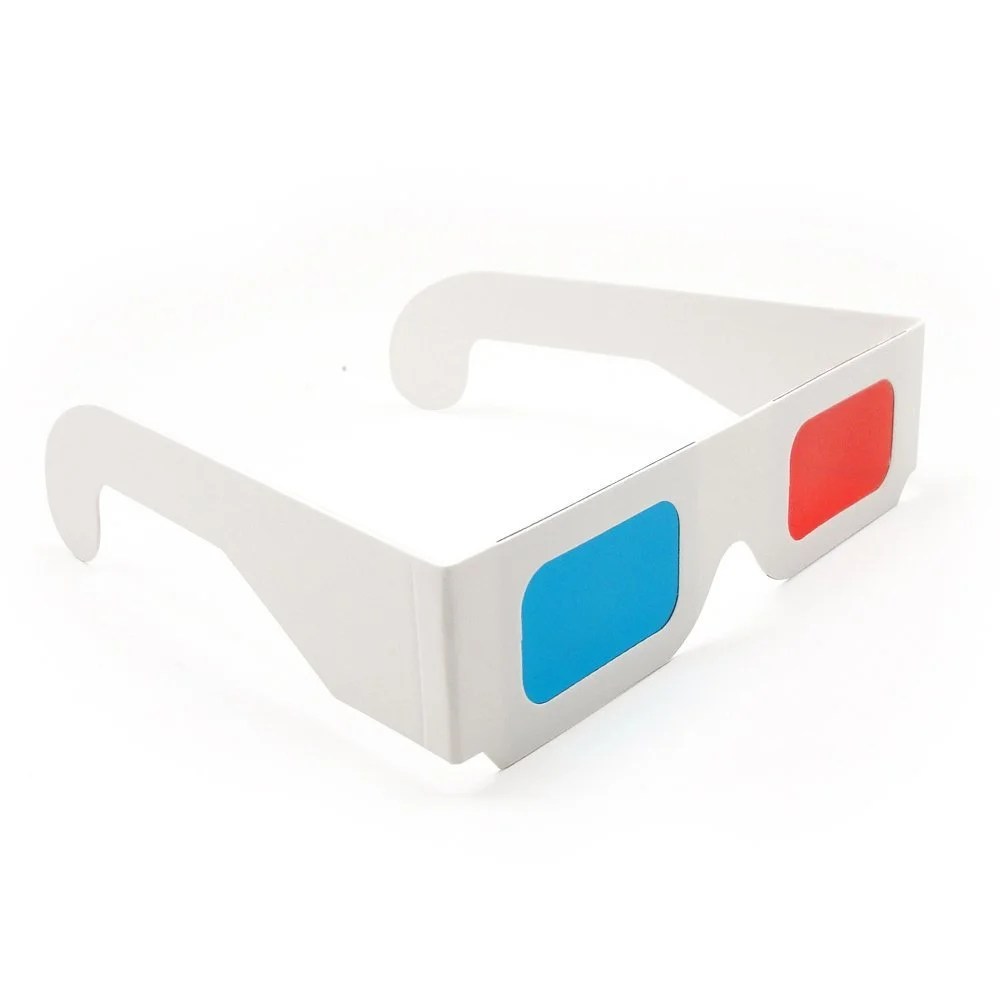
The oldest 3D technology — and still the cheapest. Two slightly different images are printed or displayed in two different colors (typically red and cyan, though red-blue and red-green versions also exist). The glasses have matching color filters:
- Red lens blocks cyan, passes red → left eye sees only the red image
- Cyan lens blocks red, passes cyan → right eye sees only the cyan image
The brain fuses the two slightly offset images into a perception of depth.
Drawbacks: Color accuracy is severely compromised — you cannot reproduce accurate colors through colored lenses. The 3D effect is mediocre compared to polarized or active-shutter systems. But the glasses cost pennies to produce, work on any screen (TV, printed page, phone), and require no electronic components.
Active Shutter Glasses
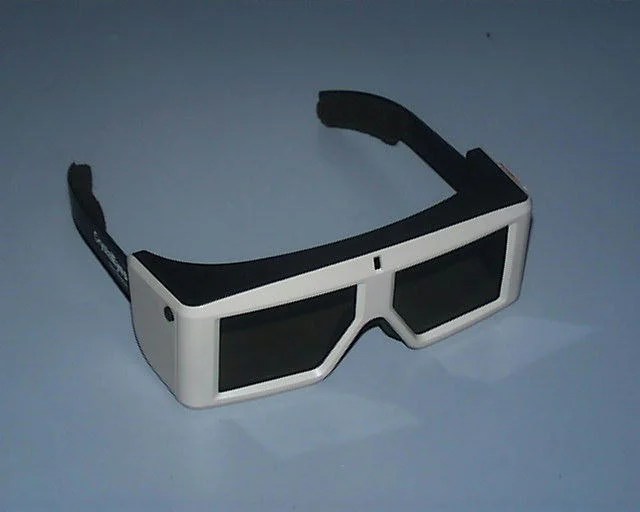
Rather than using polarization to separate the images, active shutter glasses use time: the screen alternates rapidly between left-eye and right-eye frames, and the glasses' lenses physically shutter — blocking one eye, then the other — in synchronization.
The lenses are made of liquid crystal panels. When a voltage is applied, the LC panel becomes opaque (blocks light); when released, it becomes transparent. Synchronized via infrared or Bluetooth to the display, each lens alternates at half the display's refresh rate.
For a 120 Hz display:
- Left lens open, right lens closed → 60 Hz (left-eye frames)
- Right lens open, left lens closed → 60 Hz (right-eye frames)
Each eye effectively sees a 60 fps video. The persistence of vision fills the gaps.
Advantages: Excellent image quality, no color compromise, full brightness to each eye. Disadvantages: Glasses are expensive (~$20–100), require batteries, must be charged, and can produce noticeable flicker for some people (especially in bright environments). Also, the effective brightness is halved — each eye only receives light half the time.
Virtual Reality: The Ultimate 3D
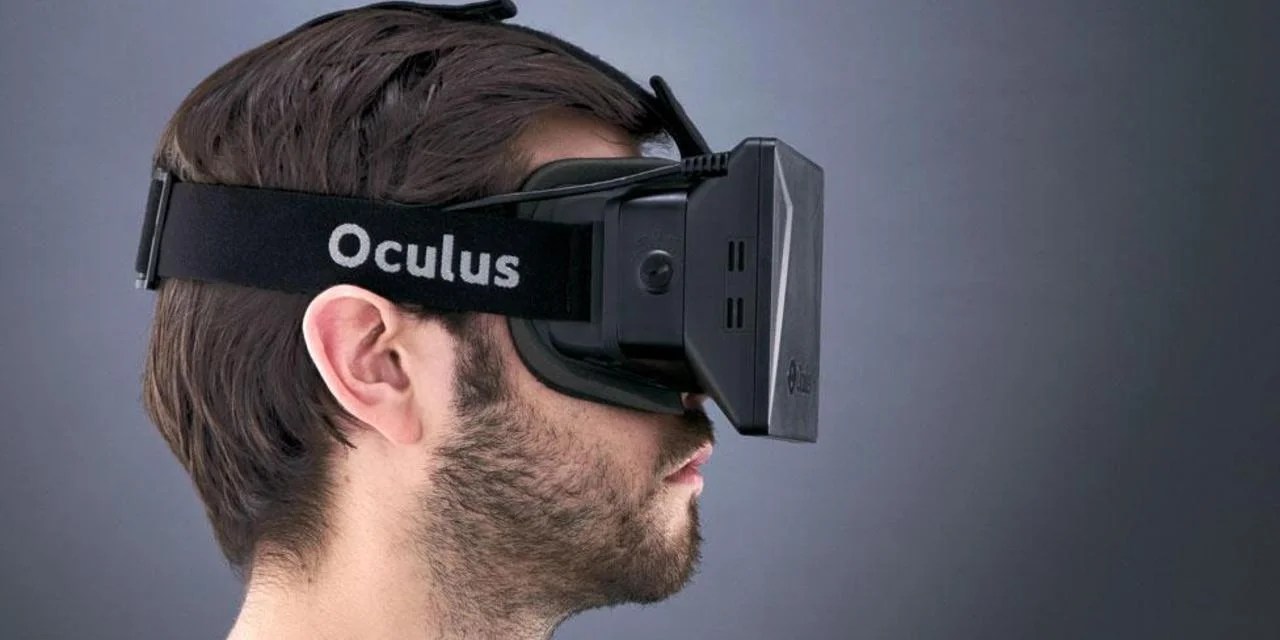
VR headsets take stereoscopic 3D to its logical conclusion: instead of projecting onto a flat screen, each eye gets its own dedicated display, positioned just centimeters from the eye. The small displays are magnified by lenses and fill most of the field of view.
The key addition: head tracking. Sensors (accelerometers, gyroscopes, and sometimes external cameras) track the position and orientation of the headset in real time. The rendered scene updates accordingly — if you turn your head right, the virtual world rotates as though it's a real physical space. This motion parallax cue is what makes VR feel truly immersive: not just a 3D image on a screen, but a space you're inside.
6 degrees of freedom (6DoF) tracking — three rotational axes (pitch, yaw, roll) and three translational axes (forward/back, up/down, left/right) — allows the headset to track not just head rotation but physical movement through space. Step forward in the real room, and you step forward in the virtual world.
The limits of stereoscopic 3D: Despite the impressiveness of 3D cinema and VR, the technology introduces a well-known perceptual conflict: the vergence-accommodation conflict. Real depth requires the eyes to both converge (rotate toward each other) and accommodate (focus the lens) simultaneously. In stereoscopic displays, the eyes must converge at the virtual depth of the object but always accommodate to the fixed physical screen distance. This mismatch is a primary cause of eye strain and nausea in prolonged 3D viewing — and solving it remains one of the central engineering challenges in next-generation VR/AR optics.
Explore more simulations
Every concept on PhysicStuff has an interactive simulation. No login, no setup required.